
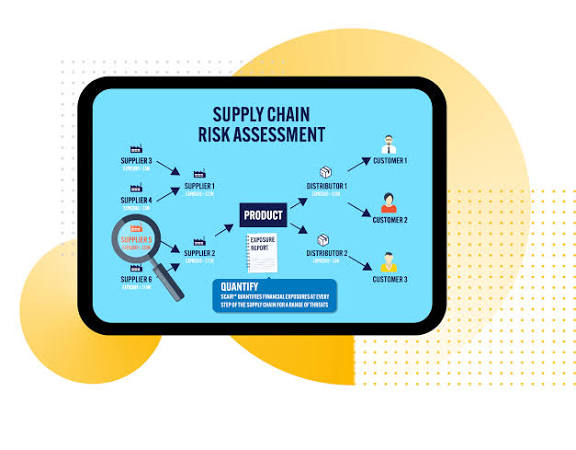

The evolution of the global supply chain has led to significant multi-national and multi-country linkages between manufacturers, suppliers, distributors and customers. This global network brings on new business opportunities but also comes with quality risks, including performance, regulatory and customer satisfaction. If one link in the chain is broken, production can be disrupted or products recalled, or finances lost.
To address these challenges, businesses are shifting from conventional quality assurance and implementing a structured approach to risk assessment. These models aid organizations in finding potential problems before they become expensive issues. Companies can make informed decisions to enhance quality management processes before the production, instead of reacting to defects later in the process.
Why Risk Assessment Is Essential in Modern Supply Chains
Manufacturing environments are constantly changing. The potential for quality problems grows due to new suppliers, new regulations, new customer requirements, and shorter production times. Businesses can miss issues unless they have a structured approach to risk assessment, and risks can only be addressed after products have entered the marketplace.
This is where a professional Inspection Company can be of great assistance. Inspection professionals and technical knowledge, working with structured evaluation techniques, identify potential risks throughout the production process, at suppliers, in the documentation and in the finished product. Their self-evaluations provide companies with greater confidence in sourcing products from a variety of locations worldwide.
Key Quality Risk Assessment Models
Risk management strategies vary according to the type of manufacturing business. Proven analytical models are utilized in modern quality systems to detect potential failures, prioritize corrective actions and increase the reliability of the process. With these methodologies, more effective decisions can be made and excess inspection expenses minimized.
- Failure Mode and Effects Analysis (FMEA): Defines possible failure modes, their severity, and assigns priority for corrective action, according to risk.
- Risk Priority Number (RPN): Numbers assigned to severity, occurrence, and detection to rank quality risks.
- Inspection points and monitoring activities for critical manufacturing processes are defined within the Control Plan Analysis.
- Statistical Process Control (SPC): Provides a check on production data to ensure that the process is stable and that the variations are identified prior to the production of defects.
- Root Cause Analysis (RCA): Analyses re-occurring quality problems and seeks out the root causes to address them rather than their symptoms.
- Supplier Risk Matrix: Classifies suppliers according to their production capacity, supplier quality history, and compliance history.
They can be used together in order to achieve a total picture of operational risks. They do not have to depend on the product testing for quality assurance, but can build quality into the product at every point of its production.
How Risk Models Improve Supply Chain Performance
Quality risk assessment isn’t just about minimizing defects. It ensures consistency of suppliers, better communication between manufacturing partners and better production planning. Dedicated businesses know where to look for hazards, and how to distribute their resources to address them.
These models also foster supplier relationships. By collaborating with suppliers, manufacturers can identify issues before they are delivered and make process improvements to help keep issues from recurring. This is a proactive strategy to prevent waste, delays and make the supply chain more resilient.
Common Challenges During Risk Assessment
While the risk assessment models are very good, it may not be easy to implement them in global operations. A difficulty is getting dependable data from several suppliers. Comparing performance can be challenging due to variations in reporting, documentation and production systems.
One difficulty is keeping a level head. Changes in equipment, personnel, raw materials, or industry regulations may cause a change in risk. Organizations need to continually refresh their assessment models, making sure that they take into account actual manufacturing conditions and not assumptions.
The Future of Risk Based Quality Management.
Manufacturing is getting increasingly digital and so is quality management. Today, artificial intelligence, predictive analytics and Industrial Internet of Things (IIoT) technologies give continual oversight of production activities. Such innovations enable businesses to detect new risks much earlier than the traditional approach to detection.
Meanwhile, there is a growing emphasis among customers and regulators for increased transparency across the supply chain. Those companies that invest in sophisticated risk assessment models will be better equipped to meet compliance requirements, optimize their operations and ensure a constant quality of their products in changing global markets.
Conclusion
It’s not just about regular inspections to manage quality on an international supply chain. Requires a disciplined method of recognizing threats, deciding on actions to reduce the risk, and continually seeking ways to enhance manufacturing processes. Organisations can improve their supplier performance, minimise uncertainty and ensure their products continue to satisfy the customer’s expectations by using tried and tested assessment models.
These models of risk assessment, when used in conjunction with a detailed Manufacturing process audit, give a comprehensive picture of operational performance. Their role is to ensure that business processes are effective, that businesses comply with regulations, and that they have a better base for future quality excellence in their manufacturing operations worldwide.
